2025 Antibacterial Therapeutics Funding Round

2025 Antibacterial Therapeutics Overview and Outcomes
In 2025, PACE launched its third funding round, focused on projects developing novel antibacterial therapeutics aimed at treating bacterial infections with high unmet medical need. The call attracted 188 expressions of interest from 40 countries worldwide, highlighting continued global engagement with the urgent challenge of antimicrobial resistance (AMR). £6m was available and six successful projects were awarded up to £1m each in grant funding alongside wider support from PACE for up to two years. By providing highly targeted funding and support for innovative and diverse projects, our strategic goal is to drive tangible progress in the pipeline for antimicrobial therapeutics, enabling more innovations to advance towards the clinic.






PACE offers more than grant funding. We take a collaborative approach to project development and delivery. Those who secure funding benefit from a network of potential project partners and receive advice and guidance from some of the best in the field. We are there for the long run, so applicants who were not successful this time can stay connected to our community and continue to benefit from our expert ecosystem.
Focused on projects with the greatest potential
We sought projects at Hit-to-Lead or Lead Optimisation stage targeting drug-resistant bacterial infections with a high burden and unmet need, informed by research on the global burden of bacterial AMR published in The Lancet and the WHO’s 2024 Bacterial Priority Pathogens List. Lower respiratory tract infections (LRTI), bloodstream infections (BSI) and complicated urinary tract infections (cUTI) were the clinical indications in scope for the call.
Projects needed to be focused on developing novel therapeutics applicable for drug-resistant bacterial infections associated with WHO priority Gram-negative pathogens Enterobacteriaceae (prioritising E. coli and K. pneumoniae), A. baumannii or P. aeruginosa.
We sought projects with strong potential to meet the WHO innovation criteria: a new chemical class, a new target, a new mechanism of action, or an absence of cross-resistance with existing antibiotics. Any modality was welcome, including small molecules, natural products, peptides, antibodies, proteins and phage, provided the therapeutic had an antimicrobial effect. Direct-acting and non-direct-acting approaches, including anti-virulence agents, immunomodulators and potentiators, were all in scope. The call was open to innovators worldwide, with no requirement for a UK-based partner, and we welcomed both maximum-award projects and smaller, innovative or higher-risk ones.
Selection process overview and key metrics
The funding round was a two-stage application process structured to identify high-potential, strategically aligned projects and to provide applicants with clear guidance and support throughout.
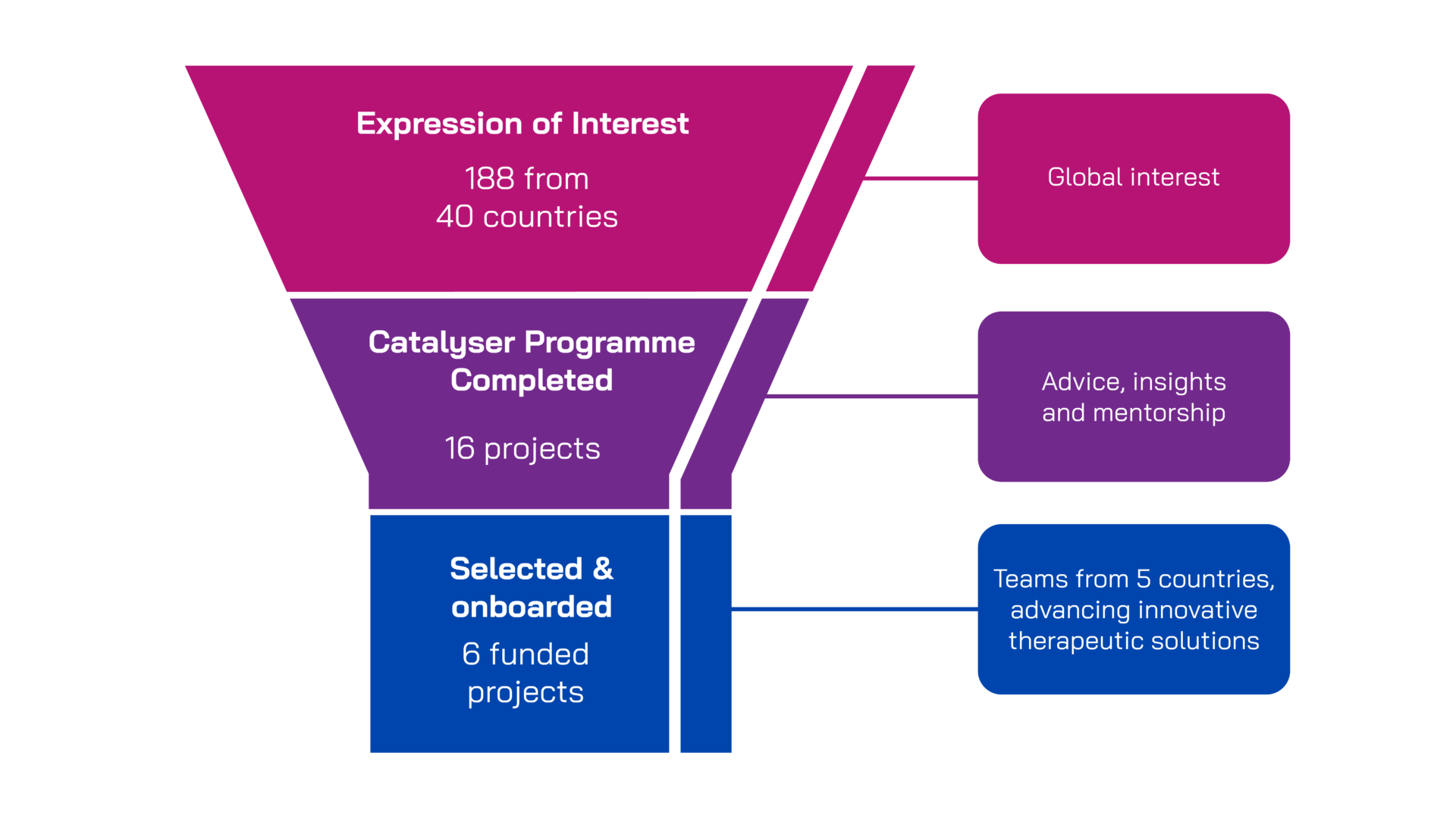
We received a strong global response, with 188 expressions of interest from 40 countries. Each submission was reviewed against the scope of the funding call and innovative potential. 16 shortlisted applicants were invited to take part in a structured Catalyser programme, which began with an initial workshop in January 2026. The Catalyser is a supportive process designed to help teams refine their project plans and strengthen key aspects of their application.
All 16 Catalyser participants submitted full applications for funding and support from PACE. Final proposals were reviewed by an independent external Scientific Projects Advisory Group and a committee of people who have been affected by AMR, the AMR Community Representatives Committee. Final funding decisions were made in July 2026 by the PACE Joint Programme Management Board, which took into account recommendations from the external expert panels, as well as strategic and portfolio fit. Six projects were selected and onboarded into the PACE Portfolio.
Project Onboarding Journey: From EOI to Portfolio
Portfolio Outcomes
The projects that entered the portfolio from this funding round bring a range of approaches to the challenge of AMR. Together, they are advancing novel antibacterial therapeutics aiming to strengthen and diversify the clinical pipeline.
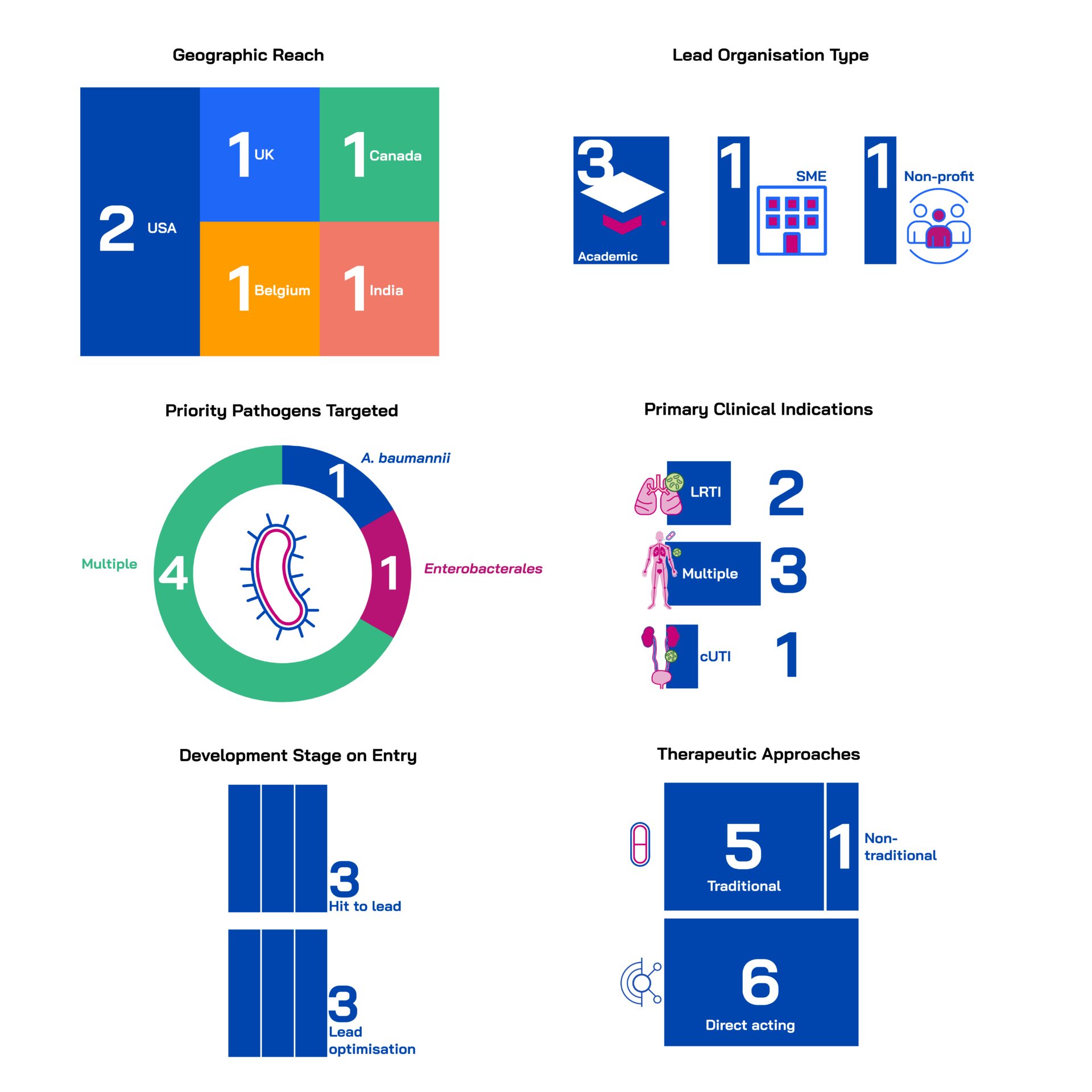
Led by innovators in universities, small companies and non-profit organisations across five countries, the projects were selected for their novelty, quality and alignment with unmet medical needs. The projects all have the potential to address one or more of the indications in scope for the funding round: two are focused on lower respiratory tract infections, one on complicated urinary tract infections and the rest on multiple indications, including bloodstream infections. All projects are developing direct-acting therapeutics that target one or more WHO priority Gram-negative pathogens.
Five of the projects are developing small molecules or natural products, and one is a non-traditional, lysin-based therapeutic. At the time of portfolio entry, three projects were in Hit-to-Lead and three in Lead Optimisation. To find out more about each project, visit our Portfolio page.